NUG Seeks Stronger U.S. Partnership, Warns of China’s Expanding Role in Myanmar
WASHINGTON — Myanmar’s National Unity Government (NUG) called for stronger U.S. engagement with the country’s democratic movement, expressing concern over China’s role in supporting Myanmar’s military authorities during a briefing held at the Rayburn House Office Building on July 24th.
The NUG was formed by elected lawmakers removed from office in the February 2021 military coup, together with representatives of pro-democracy groups.
Speaking at the briefing hosted by the Burma Research Institute, NUG Foreign Minister Zin Mar Aung urged U.S. law and policymakers to view Myanmar not only as a country in crisis but also as a key geopolitical crossroads with implications for regional and global security.
“Today, Myanmar has become one of the geopolitical frontlines of the Indo-Pacific,” she said, stressing the fact that instability in Myanmar fuels transnational crime, cyber scam networks, human trafficking, narcotics trafficking, and regional insecurity.
“What happens in Myanmar no longer stays in Myanmar,” she said to the group of congressional staff and US-Myanmar policy stakeholders, which included ethnic leaders, scholars, diplomats, and activists from the diaspora.
Concerns Over China and the Need for US Support
During the briefing, the minister, along with other NUG officials, stressed their concerns about what they described as China’s growing cooperation with Myanmar’s military dictatorship.
“Myanmar has witnessed growing security cooperation between the military regime and external authoritarian partners,” she said. “These cooperations include military assistance, aviation support, surveillance technologies, sanctions evasion, illicit financial networks, and diplomatic protections.”
The NUG officials stressed the need for continued support for democratic institutions in Myanmar from neighboring countries and regional actors such as ASEAN, the Association of Southeast Asian Nations, along with countries like India, Japan, and, especially, the United States.
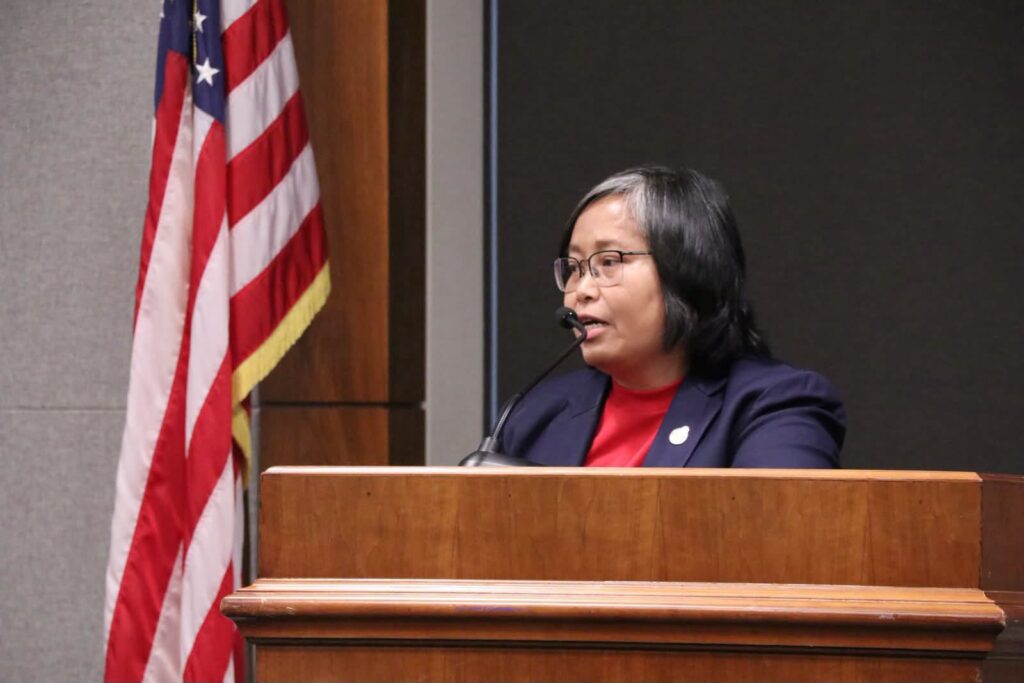
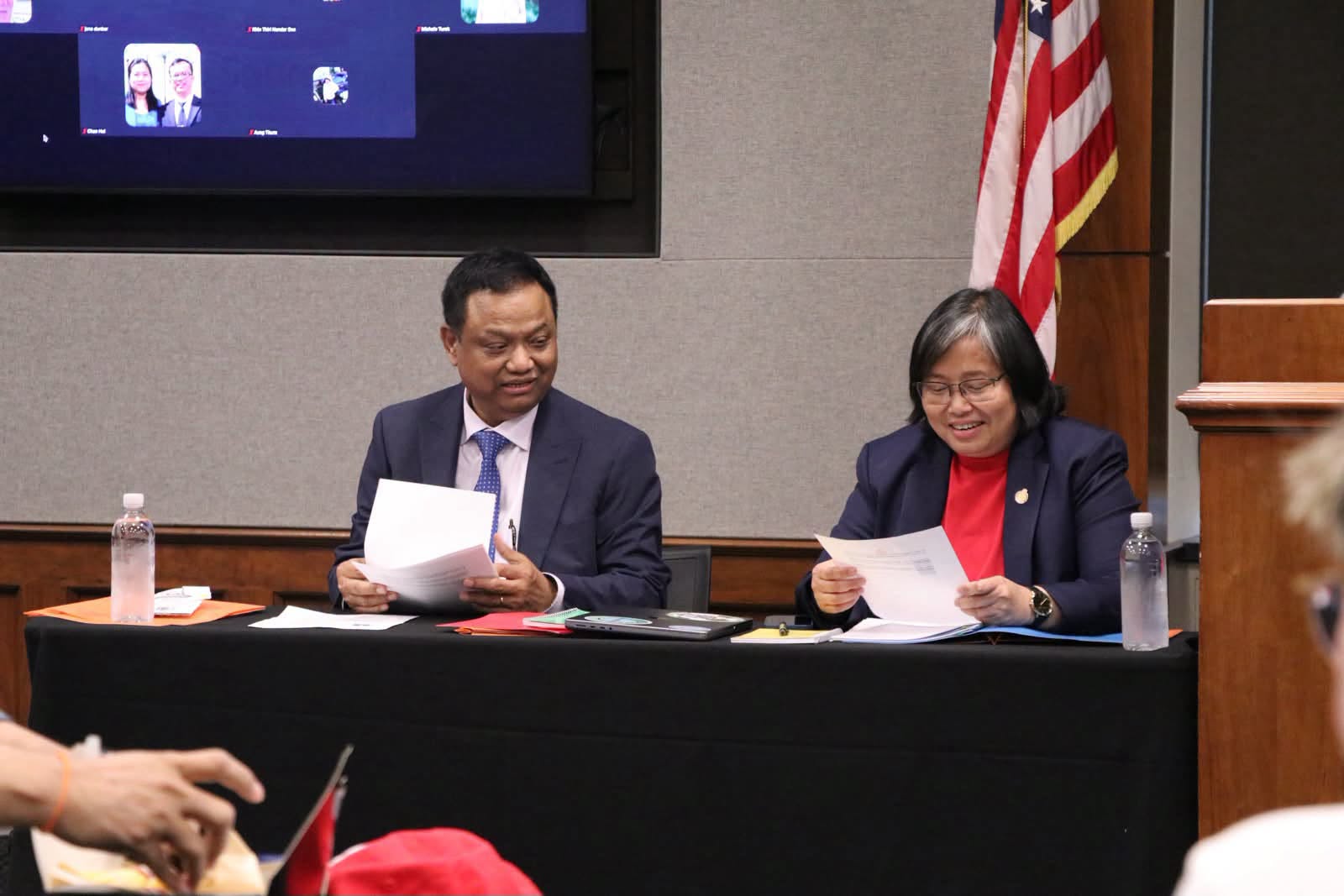
Foreign Minister Zin Mar Aung speaks during the 8th Hybrid Congressional Briefing on Burma at the Rayburn House Office Building in Washington, D.C., on July 24, 2026. (Photo Credit: Ministry of Foreign Affairs – Myanmar – NUG)
“This is not about asking Myanmar to choose between major powers. China is our permanent neighbor, and it will remain an important economic partner,” the foreign minister said.
“Our concern is not any country’s legitimate interest,” she added, “our concern is when external support enables continued violence against civilians, prolongs conflict, weakens regional stability, and undermines the international rules that benefit us all.”
The foreign minister’s remarks came about a month after Chinese President Xi Jinping met Myanmar’s military leader Min Aung Hlaing in Beijing.
According to China’s official account of the June 16 meeting, Xi said China places its relationship with Myanmar “in an important position” in its neighborhood diplomacy and supports Myanmar in pursuing “a development path suited to its national conditions.”
It went on to add that China had agreed to expand cooperation on “border security, telecommunications fraud, online gambling, economic development, and the China-Myanmar Economic Corridor.”
Although the NUG welcomes constructive relations with China, the minister stressed in the briefing, it believes Myanmar’s long-term stability depends on an inclusive federal democratic system rather than continued military rule.
“Ultimately,” she said, “the real strategic competition is not between countries. It is between two models of governance.”
Border Scam Networks Pose International Threat
Another major focus of the briefing was the rapid expansion of cyber scam compounds operating along Myanmar’s border regions. Zo Tum Hmung, President and CEO of the Burma Research Institute (BRI), cited growing concerns over transnational criminal organizations that target victims around the world, including in the United States. The Burma Research Institute (BRI) is a Washington, D.C.-based research and policy organization focused on Myanmar, regional security, democratic governance, and U.S. policy engagement.
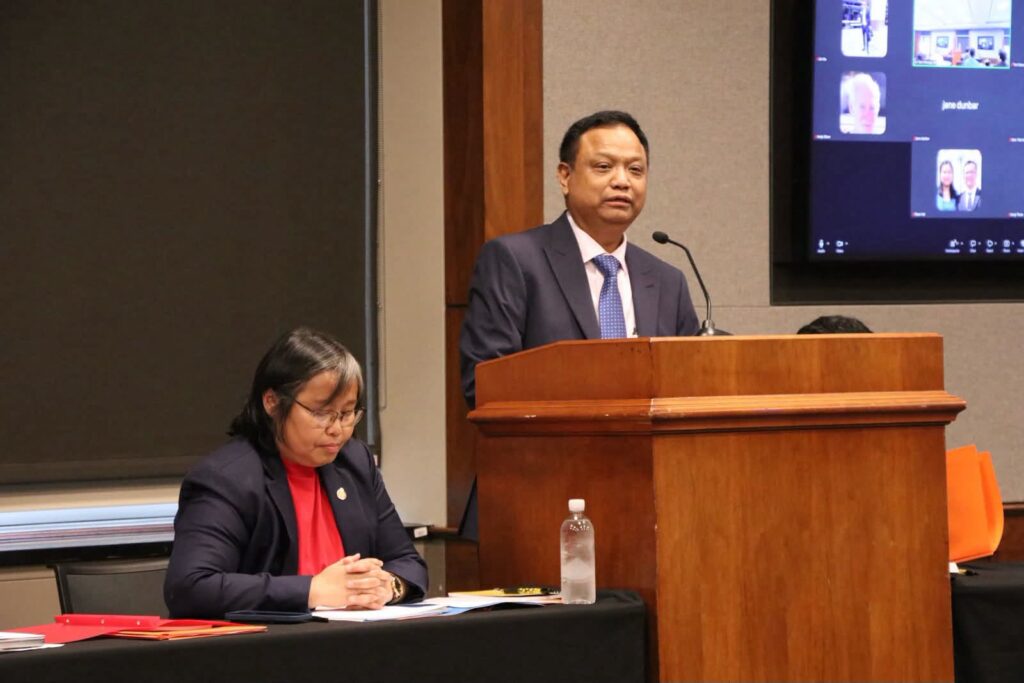
Zo Tum Hmung, president and CEO of the Burma Research Institute (BRI), moderates the 8th Hybrid Congressional Briefing on Burma at the Rayburn House Office Building in Washington, D.C., on July 24, 2026. (Photo Credit: Ministry of Foreign Affairs – Myanmar – NUG)
The issue has also drawn increased attention in Washington. During a June 25 hearing before the House Foreign Affairs Committee, Assistant Secretary of State for East Asian and Pacific Affairs Michael DeSombre described cyber scam operations in Southeast Asia as a growing threat to U.S. national security, estimating that Americans lost more than $12.5 billion to online fraud in 2025.
Despite China’s official stance on fighting cyber crime through cooperation with Myanmar’s military government, Minister Zin Mar Aung said in the briefing that supporting democratic resistance groups controlling territory near the Myanmar-Thailand border would be more effective in dismantling scam compounds than engagement with Myanmar’s military.
Five Policy Requests for Washington
Zin Mar Aung, the foreign minister of the NUG, concluded by urging the United States to continue supporting Myanmar’s democratic movement, listing five priorities: increasing pressure on the military’s financial networks, expanding humanitarian assistance through local organizations, strengthening regional cooperation against cyber scam operations and transnational crime, maintaining engagement with the NUG and the newly formed Steering Council for the Emergence of a Federal Democratic Union (SCEF), and supporting democratic governance and institution-building.
“These are not simply investments in Myanmar,” the minister stressed, “these are investments in long-term regional stability.”
She concluded by urging policymakers to view Myanmar as a strategic opportunity rather than simply a humanitarian crisis. “Helping Myanmar succeed is therefore not an act of charity. It is a strategic investment in a more secure Indo-Pacific.”