What would it take for Myanmar to comply with any ICJ orders in the Rohingya genocide case?
The IIMM chief says international pressure would be needed to ensure Myanmar complies with the court’s orders.
The Rohingya genocide case before the International Court of Justice (ICJ) concerns whether Myanmar bears responsibility for the actions of its authorities, Nicholas Koumjian, head of the Independent Investigative Mechanism for Myanmar (IIMM), said in response to a question from MGM. He described the case as an important way to hold Myanmar to account.
If the ICJ finds that Myanmar violated the Genocide Convention, “it would be up to the judges to decide what relief is appropriate and what they will order in response to that violation,” Koumjian said.
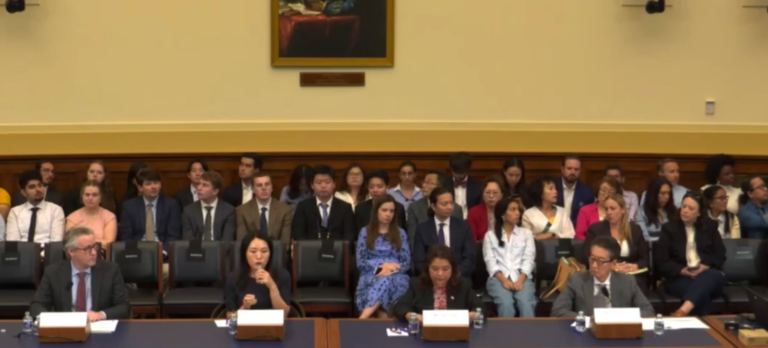
Koumjian spoke at a panel titled “Justice and Accountability in Myanmar” in New York. The panel took place on October 28 at Australia’s permanent mission to the United Nations during Women, Peace and Security Week, with support from the UN missions of Panama, Switzerland and Australia.
Koumjian distinguished the case from those before the International Criminal Court (ICC), which deals with individual criminal responsibility.
Koumjian also cautioned that even a ruling in The Gambia’s favor would not by itself enable the Rohingya to return home. He said he did not expect Myanmar’s military leaders to respond to a judgment by allowing the Rohingya to return, restoring their property or compensating them for their losses.
“It’s going to require the international community to say, ‘This needs to be enforced. This needs to be respected,’” he said.
What the court will decide
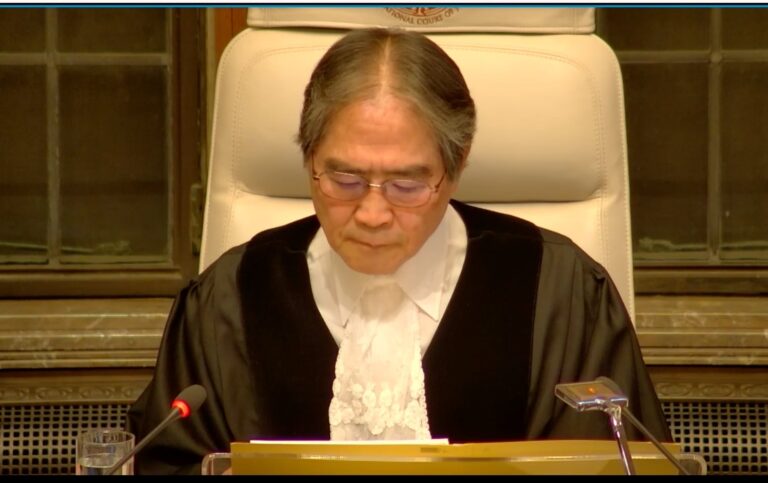
The International Court of Justice (ICJ) is scheduled to deliver its judgment in The Gambia v. Myanmar on November 19 in The Hague, the Netherlands. The court will decide whether Myanmar violated its obligations under the Genocide Convention.
More than 700,000 Rohingya fled to Bangladesh during the Myanmar military’s 2017 operations in Rakhine State. The Gambia brought the case in 2019.
The Myanmar regime’s defense and the NUG’s position
At the final hearing on January 29, presidential office minister Ko Ko Hlaing led Myanmar’s delegation on behalf of the military regime, which took power in a February 2021 coup. He argued that The Gambia’s allegations had no basis in law or fact and asked the court to reject them, along with The Gambia’s requests for remedies for the Rohingya.
Myanmar’s U.N. ambassador, Kyaw Moe Tun, who publicly condemned the 2021 military coup, told the General Assembly on November 5 that the National Unity Government (NUG) accepted the ICJ’s jurisdiction and was ready to implement its orders. Formed after the coup by elected lawmakers who opposed the military takeover, the NUG includes representatives from ethnic minority groups and civil society. He said he hoped the ruling would bring justice to the Rohingya and help refugees return home voluntarily, safely and with dignity.
What the IIMM does
The IIMM collects, preserves and analyzes evidence of alleged war crimes, crimes against humanity and genocide in Myanmar since 2011. Its sources include witness testimony, satellite imagery and social media videos. The mechanism says it has shared evidence and analysis concerning alleged crimes against the Rohingya with both parties to the ICJ case, with the consent of those who provided the information.